9 in 10 Women Would Stay Longer With Employers That Support Midlife Health
Flexible schedules and paid mental health days named top ways to support midlife women in the workplace.
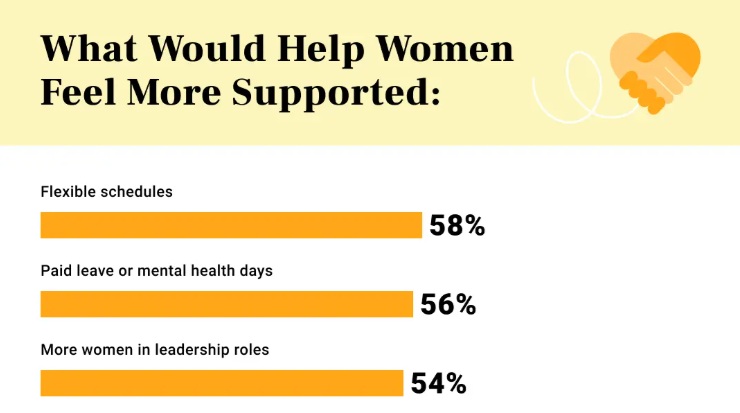
A new study from LiveCareer UK®, a trusted online CV builder, reveals that meaningful menopause and midlife health support could be one of the most effective retention strategies for today’s workforce. According to the Midlife Divide Report, 91% of women say they would be more likely to stay with an employer that actively supports midlife health needs. Flexible schedules (58%), mental health days (56%), and more women in leadership roles (54%) were ranked as the most impactful forms of support.
According to the LiveCareer UK Midlife Divide Report, 91% of women are more likely to stay with an employer that actively supports midlife health needs. This finding highlights that meaningful menopause support is a crucial retention strategy, with flexible schedules and mental health days identified as the most impactful workplace adjustments.
Key Takeaways:
- 91% would be more likely to stay with an employer that actively supports midlife health needs.
- Flexible schedules (58%), mental health days (56%), and more women in leadership roles (54%) were ranked as the most impactful forms of support.
- 68% say gender and age influence how seriously their health concerns are taken at work.
- Nearly one in four (23%) feel menopause is still misunderstood and insufficiently addressed in the workplace.
Menopause Support as a Retention and Inclusion Strategy
Nine in ten women (91%) say they would be more likely to stay with an employer that actively supports midlife health needs. Far from a niche issue, menopause awareness and accommodation are fast becoming key components of inclusive, competitive workplaces.
“Menopause shouldn’t be a career limiter,” said Jasmine Escalera, career expert at LiveCareer UK. “When organizations normalize the conversation and provide meaningful support, they’re not just helping women, they’re protecting their leadership pipeline and building a stronger, more inclusive culture.”
Flexibility Tops the List of What Midlife Women Want Most from Employers
When asked what would make them feel more supported at work, women overwhelmingly pointed to flexibility, paid leave, and representation, underscoring the need for both policy and cultural change in the workplace.
What Would Help Women Feel More Supported:
- 58% — Flexible schedules
- 56% — Paid leave or mental health days
- 54% — More women in leadership roles
- 37% — Manager training on menopause
- 25% — Health insurance that covers menopause-related care
- 8% — Peer groups or safe spaces for discussion
How Women Manage Menopause
In the absence of targeted workplace benefits, many women rely on personal strategies to manage symptoms and maintain productivity:
- 58% seek therapy or mental health support.
- 58% turn to exercise or nutrition changes.
- 52% use hormone replacement therapy (HRT) or other medication.
- 40% rely on supplements or alternative medicine.
- 29% adjust their work hours to cope.
- 6% are not taking specific action; fewer than 2% say symptoms haven’t affected their work.
Gender and Age Bias Shape How Midlife Health Is Perceived at Work
Even as conversations about menopause become more visible, a persistent perception gap remains.
- 68% say both gender and age affect how their health concerns are taken.
- 22% cite gender alone.
- 8% say age is the primary factor.
- Only 2% believe neither gender nor age plays a role.
These perceptions reinforce how workplace culture, not just policy, determines whether women feel seen and supported during a critical career stage.
To view the full report, please visit https://www.livecareer.co.uk/career-advice/midlife-support-in-the-workplace
Methodology
The findings were obtained by surveying 898 working women in the U.S. who are experiencing or have gone through menopause. The poll obtained information about their direct experience working through menopause. The survey was conducted on September 18, 2025. Respondents answered different types of questions, including yes/no, open-ended, scale-based questions where participants indicated their level of agreement with statements, and multiple-choice where they could select from a list of provided options.