Bridging Cultures: the Benefits of Bilingual & Multilingual Education
The number of bilingual and multilingual schools continues to rise worldwide, producing language‑savvy students equipped for a global workforce.
A multilingual or bilingual education means far more than learning how to order cake with cream in German or parsing a verb. To write, speak and understand another language is to gain a distinctive window into a country’s culture and into how people form identity and belonging.
In this article we examine the pros (and some cons) of a bilingual or multilingual education in school.
Why Bilingual and Multilingual Education Is Growing in 2026
Bilingual and multilingual education remains an increasingly relevant and accessible option for internationally mobile families. In our more mobile world, where we switch between cultures at home, work and school, families are seeking education that combines global pathways with a strong sense of cultural rootedness.
Recent data from ISC Research shows sustained and significant growth in international schools. As of early 2025, there were 14,833 K–12 international schools worldwide, with 376 new schools added in the previous six months. Asia remains the largest hub, hosting 58% of all international schools, driven by expanding economies and regional mobility.
A defining trend heading into 2026 is the increasing presence of local families in international schools, often making up the majority of enrolments. This shift is reshaping language models, encouraging bilingual and dual‑language pathways that balance global curricula with local cultural expectations. This trend in international education honours the local, as well as the multicultural context, as educators and school communities nurture the next generation of globally aware leaders.
International Schools Are Supporting Linguistic Diversity
“As international schools have become the domain for many more host-country families, language learning has shifted from English only to bilingual and multilingual offerings,” ISC comments.
The Cognitive and Academic Benefits: What Research Continues to Show
Foundational research by Ellen Bialystok continues to shape understanding of bilingual learning, with current studies reinforcing her findings that:
- Bilingual instruction at school supports long‑term benefits for children’s literacy and language development.
- Bilingual children demonstrate stronger executive function, which is linked to academic success.
- Being fluent in two languages develops all-round cognitive skills and higher executive function, builds confidence and fosters global mindedness and cultural awareness – highly transferable skills valued by prestigious universities and employers.
Newer research themes point to exciting developments, further enhancing the case for bilingual and multilingual education.
Consistent immersion
“Successful true bilingualism requires both languages to be the medium of instruction,” explains Francoise Zurbach of EIFA.
This remains even more relevant in 2026, as families seek deeper immersion rather than part‑time exposure.
Translanguaging for healthy transitions
Translanguaging – now widely supported across 2025–2026 bilingual education research, enables students to draw on all their languages to support learning and identity formation. It is increasingly valued for smoothing transitions for globally mobile children.
Integrated learning across subjects
Many bilingual international schools teach languages within subject lessons such as maths, science and humanities creating natural opportunities for language acquisition throughout the school day.
Schools Putting Multilingualism Into Practice
International School of Kuala Lumpur (ISKL), Malaysia
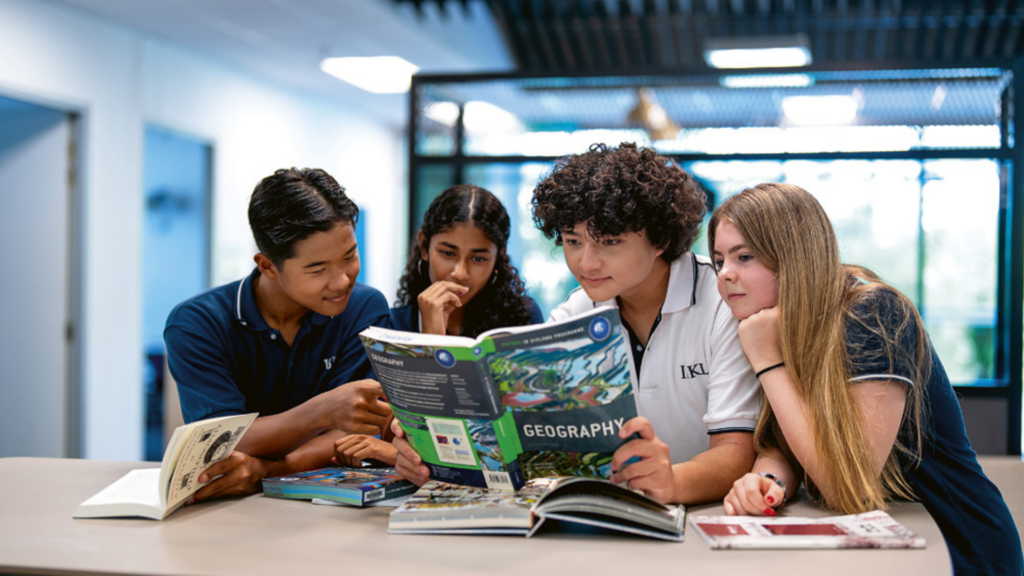
“Bilingualism and multilingualism are assets that are celebrated at ISKL,” says Head of School, Rami Madani. “ISKL welcomes linguistic diversity and promotes the development of English academic proficiency alongside the development of the home language.
International School of Kuala Lumpur
Language specialists and classroom teachers work together to ensure the best academic outcome possible within a happy, social framework. ISKL’s EAL team works in partnership with students and parents to support multilingual learners and help them fulfil their potential.
Schule Schloss Salem, Germany
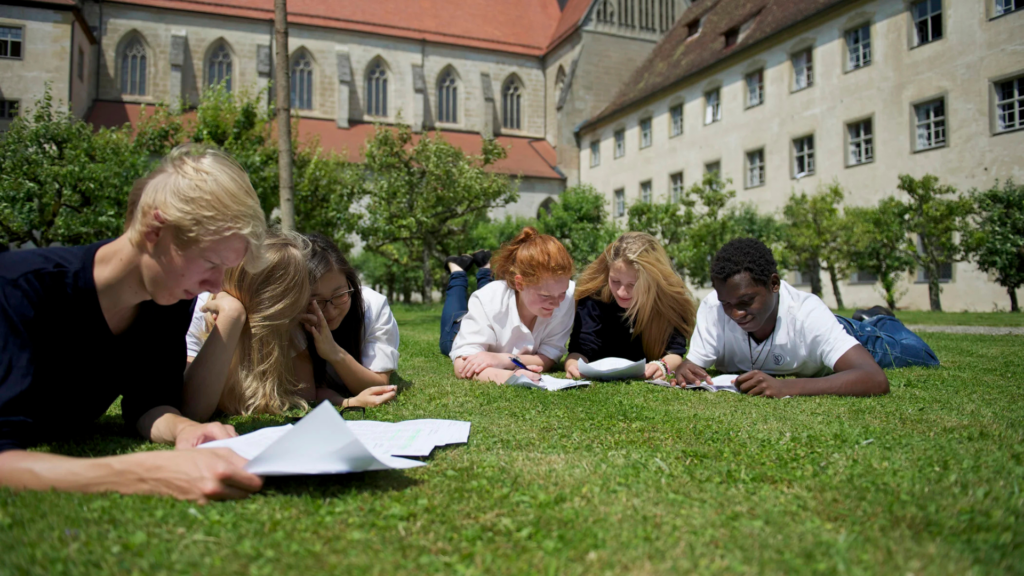
In Europe, Salem is one of two boarding schools in Germany that offer an English-speaking track and the IB programme.
So-called international schools can be found in the bigger cities all over Germany, but usually do not provide a boarding facility,” says Dr Stephanie Nau, Head of Admissions at the Schule Schloss Salem International Boarding School
Salem’s student community consists of 45 different nations. About 60% of our children speak German and about 40% of our children study German as a foreign language at Salem but follow our lessons in English. Their mother language is fully accredited in the German curriculum, replacing our second foreign language.
Schule Schloss Salem International Boarding School
International School of London (ISL), UK & Qatar
The International School of London (ISL), which has schools in the UK and Qatar, is another well-established and highly respected international school group that has multilingualism at its heart. It teaches 22 home languages and 80% of students graduate with a bilingual qualification.
“One of the purposes of education is to prepare a child for the future,” says Susan Stewart, Head of Multilingualism at ISL. “For an international child, who may be moving from one assignment to another, keeping all their language options open is crucial.

Exams and Qualifications Supporting Bilingual Learners
Given the clear benefits and often necessity of a bilingual or multilingual school option for families on the move, curricula and examination bodies around the world have adapted over decades to award qualifications that celebrate and support bilingualism.
- International Option of the French Baccalaureate (OIB), accredited by Cambridge Assessment International Education, is a Franco-British educational collaboration based on the French Bacc. Similarly, in the US, the French Ministry of Education has partnered with College Board to create American Section OIB exams.
- The International Baccalaureate Diploma also supports bilingual identities through its Bilingual Diploma. Candidates awarded a grade 3 or higher in two languages selected from the DP language and literature courses will receive this certification. Students attaining a grade 3 or higher in an individuals and societies or science subject, completed in a different language, will also be awarded the accolade.
With employers paying a premium for people proficient in more than one language, investment in a bilingual or multilingual education is a good and increasingly popular option.
Pros and Cons of a Bilingual or Multilingual Education
- Pros
-
- Strengthens cognitive flexibility and executive function
- Enhances long term literacy and linguistic competence
- Builds confidence, cultural awareness and global mindedness
- Supports transitions for internationally mobile children
- Improves university admission prospects and career opportunities
- Helps maintain home language ties while opening global pathways
- Aligns with 2026 employer demand for multilingual communication skills
- Cons
-
- Requires sustained exposure and quality instruction to be effective
- Academic load challenges may arise when learning content in a non-native language.
- Some regions still have limited access to full immersion programmes
- Programme quality varies depending on teacher expertise and school resources
- Risk of unbalanced language development if programmes are inconsistent
- Families must carefully evaluate how well the school supports home languages
An Investment in a Global Future
As of 2026, the international school market supports 7.4 million students worldwide, with bilingual and multilingual education increasingly positioned as a premium pathway for long‑term academic success and global adaptability.
For families who move countries due to diplomatic, corporate, NGO or academic careers and for local families seeking globally relevant but culturally grounded education, a bilingual or multilingual school remains one of the most effective ways to prepare children for an interconnected world. It is both an academic investment and a bridge between cultures, identities and future opportunities.