Education in France: A Practical Guide for Expat and International Families
From a well-respected state system to some of Europe’s most prestigious private and international schools, France offers a wide range of educational options for globally mobile families.
This guide explores how education in France works in practice and outlines the key options available to international families, helping parents make informed choices at every stage.
How Does the French Education System Work?
In France, school is compulsory from the age of three to 16 and is split into four stages. Nursery is from aged 3 to 6 and is followed by five years at primary school (ages 6 to 11). Secondary level includes collège for students aged 11-15 and lycée for the final three years leading to the French baccalaureate qualification, often referred to as “le bac” (not to be confused with the international IB).
What Do Expat Families Need to Know About the French School Day?
- The French school day can feel surprisingly long and structured
- Lunchtimes can last up to 2 hours
- After school care is widely available
- Teaching is formal
- Homework expectations increase in secondary education
A typical day at primary level usually runs from around 8:30am to 4:30pm, although Wednesdays are often a half day, with no school in the afternoon. Secondary school students may have longer days, with timetables that vary daily.
Lunchtime is a significant part of school life. Many children eat a hot, multi-course meal at the cantine, which is subsidised and widely regarded as nutritious and high quality. Lunch breaks can last up to two hours, particularly in primary school. Parents can also choose for children to return home for lunch if they live nearby.
After-school care (garderie or étude) is available in most primary schools and usually runs until early evening. These sessions are supervised rather than activity-led, with children completing homework or free play. Extra-curricular activities such as sport, music or arts are typically organised outside school hours through local clubs rather than through the school itself.
In France, classroom teaching remains largely traditional and structured. From around the age of six, pupils typically sit at desks facing the teacher and are expected to concentrate quietly for extended periods. There is a strong focus on foundational academic skills, particularly handwriting, with children learning to write fluently using pencils and pens, including cursive script. Core knowledge is reinforced through memorisation, such as learning multiplication tables by heart, while regular spelling dictations (dictées) are used to develop accuracy in written French. Formal instruction in grammar begins early and continues throughout a child’s education, right through to secondary school.
Homework expectations are moderate at primary level but increase significantly in collège and lycée, where students are expected to work independently and manage multiple subjects. Private tutoring is common in France, particularly at secondary level, and many families factor this into their routines.
While the structure can feel demanding, many expat families appreciate the clear boundaries between school, home life and leisure once they understand how the system works.
French State Schools Explained for International Families
French state schools are widely respected for their strong academic standards, structured teaching and consistency nationwide. All écoles publiques are free of charge, secular, co-educational and follow a centrally prescribed curriculum set by the Ministry of Education. This ensures that children receive the same core education whether they attend school in Paris, Provence or a small rural village.
Teaching in French state schools is traditionally teacher-led, with a strong emphasis on core subjects such as maths, French, history and science. Progression is academically rigorous, assessments are frequent, and expectations around discipline and behaviour are clear. While this approach suits many children, some expat families find the system formal, particularly for younger pupils used to a more play-based or enquiry-led style of learning.
Class sizes can be larger than in private or international schools, and there is less emphasis on pastoral care, sport and creative subjects within the school day. That said, many expat families value the cultural immersion, language acquisition and sense of integration that comes from attending a local French school, especially at nursery and primary level, where children tend to adapt quickly.
Some international families struggle with the teacher-focused approach and the reliance on rote learning. Sport and creative activities are also not usually included in curriculum.
“The state system can be brutal, especially for younger children,” says one British expat who moved to Paris from New York.
How Can Expat Families Enrol Their Child in a State School?
Enrolment in French state schools is managed locally and is typically based on your home address, meaning children are allocated a school within their designated catchment area. The first step for expat families is to register with the local mairie (town hall), which will confirm which school your child should attend.
Parents are usually required to provide proof of address, identification documents, the child’s birth certificate, vaccination records and previous school reports. Once approved by the mairie, families then complete registration directly with the school.
For non-French-speaking children, support varies by location. In larger cities, some schools offer UPE2A classes specialist support units designed to help newly arrived children learn French while gradually integrating into mainstream lessons. Availability is limited, however, and places are not guaranteed.
Timing is important. While state schools accept pupils throughout the year, places at popular schools can be limited, particularly in urban areas. Many expat families choose to work with relocation consultants to navigate the process, especially when registering mid-year or moving with older children.
Private Schools in France
The state also subsidises some French private schools (known as “sous contrat” schools) where heads can work to their own timetable. Many of these are catholic with low fees, but only between 15 and 20 per cent of French families choose this option. In both types of state school, lessons are conducted in French following the national curriculum and students take “le bac” at the end of high school.
There are also several different types of international school in France – some are state funded and others entirely private.
International Schools in France
The simplest option for globally-mobile families is often the private international school system where lessons are taught in English. There are over 100 private international schools in France with most in Paris but Lyon, Marseilles, Toulouse, Montpelier, Bordeaux, Nantes and Lille also have private international options.
Traditionally these schools have only attracted expats but this is changing.
“More locals are seeking an international education for the English language skills, international mindedness, SEN provision and pastoral care,” says Nalina Cook, head of global research at ISC Research.
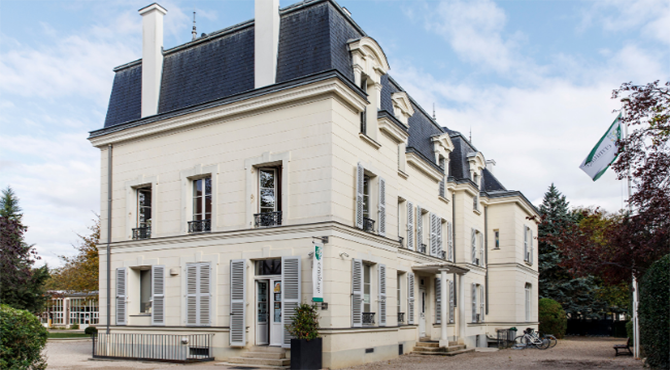
Emitage International School
Class sizes are smaller than in the French state system, facilities better and there is greater access to extra curricula activities. Students can also study for exams recognised in their home country such as IGCSE, A levels, the American Diploma or for the internationally recognised IB.
“French families looking for a quality anglophone education and a different approach to the traditional French teaching style are also attracted to international schools. The French public education system is under pressure to catch up with a rapidly evolving, globalised world and the international schools’ market is seen as modern, hands-on and dynamic in comparison,” says Véronique Martinet, director of admissions for Globeducate France.
“Our schools are ahead of the curve with sustainability education, bilingualism, AI, coding and robotics and the emphasis on emotional wellbeing.”
“We chose the private over the state system for number of reasons,” says Jane Bruce whose twins attended the British School. “It had better facilities and extra curricula activities and a more nurturing approach. The French system has a reputation for being tough which would not have suited our daughters. We also liked the fact the curriculum included traditional events such as Christmas concerts, which the French system did not.”
Marymount International School, centrally located in Neuilly-sur-Seine, has also seen an increase in enquiries from locals. “We are fielding more interest from French families who see international education as a personal investment,” says the school’s Kate Doherty. “A new generation of younger parents is also turning to international schools. Many come from entrepreneurial backgrounds and are invested in a socially conscious education for their children.” Marymount, which celebrates its centenary this year, educates children aged between 2 and 14. The school was founded in 1923 on Catholic values and is the oldest international school in the region.
The private international schools in Paris include some of the most exclusive in Europe. All are co-ed and most are clustered in the western suburbs. The most popular curriculums are French, British and the IB, although there are many others on offer including American, German and Canadian. Private international schools are not subsidised by the government, or inspected by them, so it is wise to choose one which belongs to the Council of British International Schools (CBS) or the Council International Schools (CIS).
One of the most popular is the American School of Paris, established in 1946, on a 10-acre campus in the western suburbs. Students study the American curriculum leading to the High School Diploma or the IB.
The British School of Paris in Croissy on the western outskirts of Paris is another popular choice. It was the first British school in France, founded in 1954 and the multicultural student body studies the British curriculum leading to IGCSE and A level exams. Both schools allow their students to continue in a system they are already familiar with – and one which they can slot back into when they return home.
For families who like to be at the heart of the action the International School of Paris in the 16th arrondissement is the only private international school in central Paris and is popular for its three IB programmes and international feel.
For families seeking a boarding option the exclusive Ermitage International School offers weekly or full boarding but fees are steep, nudging US$40,000. Founded in 1941 it is located in Maisons Laffitte, 20 km from Paris and a 15 minute train ride from La Defense, the financial centre of Paris. The school offers a choice of the French bilingual programme leading to the Bac, the BFI, or the IB.
Elsewhere in France the number of international options is growing. Lyon, France’s third largest city, has seen an increase in the number of globally mobile families. In response, the International School of Lyon opened in 2004 and delivers the IB programme in a leafy suburb south west of the city.
Toulouse also has a strong globally mobile population thanks to its thriving aeronautical and space industries and a host of tech start-ups. The fouth largest city in France with 1.3 million inhabitants, its population has grown by over 12 per cent in last the decade. The International School of Toulouse opened in 1999 to cater for the children of workers in the local aircraft industry and now has 550 students who study for IGCSE exams followed by the IB diploma.
According to Globeducate, the south of France is seeing the strongest growth in demand for international schools, particularly the Côte d’Azur, Nice, Monaco and Sofia Antipolis.
The group has three schools in the area including Mougins, a British international school located on a modern campus in Sophia Antipolis, a 2400 hectare technology hub home to 2500 companies. Founded in 1964, the curriculum is based on English national curriculum leading to IGCSE and A levels. “What makes us special is the family atmosphere you feel as soon as you come onto the campus,” says the school’s Lise Cudin.
Globeducate also operates the International School of Nice which educates 360 students from 3-18 with students taking IGCSE exams followed by the IB. Lessons are in English with daily French classes.
The independently owned International School of Monaco founded in 1994 provides a not-for-profit IB education to over 700 students while the newly opened British School of Monaco provides a primary education following the British curriculum with compulsory French lessons.
Bilingual Schools in France
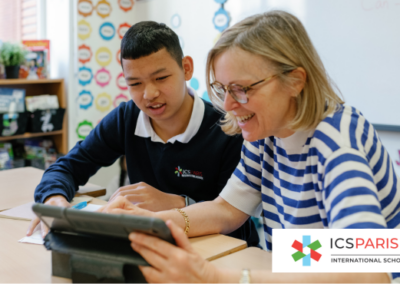
The Ecole Internationale Bilingue was established in 1954 and is also run by Globeducate. Globeducate’s has 55 international schools in nine countries and six of these are private bilingual schools in Paris educating 3000 students. Most of the schools deliver the French curriculum with strong English immersion in a multicultural environment. The group’s ICS Paris International School, is particularly popular with expat families: the 500 students from 70 countries study for the internationally recognised IB, supplemented by compulsory French lessons.
ICS Paris teaches the IB curriculum and the language of instruction is English, however, being a Bilingual Multilingual Learners Smart School they provide support for French, Japanese, Korean and Spanish language as well.
Hattemer Bilingue, a prestigious, private bilingual school established in 1885, has two schools in the 8th and 16th arrondissements. Classes are equally divided between English and French in kindergarten. In elementary, pupils are taught in English for 1h30 per day when they are introduced to different disciplines. For example, the school’s year 5 and 6 pupils have geography and science classes in English.
Explore Our Featured Schools in France

Alternative Schooling In France
Le Sallay Academy
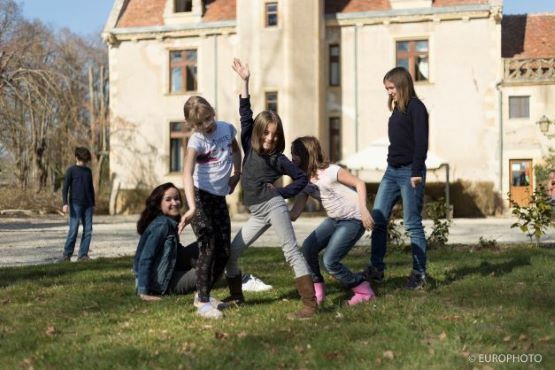
Finally, for digital nomads Le Sallay Academy offers an innovative education programme for children aged between 10 and 14 that blends boarding with online learning. There are four three-week boarding sessions during the academic year held in France at Chateau Le Sallay in Burgundy. At other times students study online with specialised programmes for gifted and SEN students. “The increase in the number of digital nomads has resulted in greater interest in alternative schooling solutions,” says the academy’s head of partnerships Natalia Ravdina.
Should expats consider a local school?
In short, maybe at primary level. The French system’s ‘écoles publiques’ offer free secular co-ed education from pre-school to senior school and follow the national curriculum set by the Ministry of Education.
These schools are usually characterised by conventional teaching methods and have high academic standards. Sports and creative activities are not usually included in the curriculum.
There is also provision within the French state system for international students who are taught parallel to standard classes in their own language in a ‘lycée international’, with an inclusive programme to help non-French speakers.
“We mainly deal with British and American families and around 20–30% of them choose to go to local state schools, especially when they relocate outside Paris,” says relocation consultant, Kattin Lopez. “When the children are young, many families decide to go to local state schools, but less often when the children are older. At a secondary level, students with no previous French education would struggle.”
Expat families are more likely to choose one of the country-specific international schools in France, including English, American, German, Spanish and Japanese. Fees are higher, but they offer transferable curriculums and there are no language difficulties.
How well are SEND students looked after in France?
Support varies greatly, according to Jessica Lament, a Paris-based education consultant and inclusion specialist and vice president of the SPRINT network, a group of anglophone professionals in France who work with SEND students.
Public schools share a psychologist who can come to support challenges. “They are often overwhelmed with caseloads and don’t see children regularly, but rather as a one-off when needed,” says Lament. “For regular support, parents need to seek help outside of school. Most teachers are not trained to support children with challenges.”
In state schools there are specialised classrooms in elementary and middle schools where trained teachers provide support. Students also have opportunities to be integrated into school life. International schools vary greatly in what they offer. Some have full learning support departments and others do not offer any specific support and may even screen students, subtly or not, who apply with educational needs.
If families are looking for English services then they will have to go outside the public French network. Different non-profit associations can offer support, such as SPRINT, which has a directory of professionals in different specialties. Many therapists have waitlists, so reach out to them as soon as possible.
Parents will need to talk to schools directly to determine how well-adapted they are for their child. Ask about which professionals they have, how support is monitored and if they allow external professionals to come into school.
Making the Right Educational Choice in France
Choosing the right school in France depends on a family’s priorities, location and long-term plans. For younger children, local state schools can offer excellent academic foundations, full cultural immersion and a cost-effective entry into French life. As children get older, many expat families gravitate towards international or bilingual schools that offer transferable curricula, stronger pastoral support and continuity across borders.
While the French education system is often perceived as demanding and traditional, it remains highly respected and delivers strong academic outcomes. With careful planning, early research and honest conversations with schools, international families can find an educational pathway in France that not only meets academic needs but also supports wellbeing, language development and long-term mobility.