

Choosing and Applying to Schools in the UK: A Guide for Expat Families
From free state schools and selective grammar schools to international and independent options, England’s education system offers relocating families an extraordinary and often bewildering range of choices. For expat parents, choosing the right school is about far more than league tables. It is about timing, continuity, culture, and finding an environment where children can settle quickly and thrive.
Drawing on practical experience and insights from relocation and education specialists, this guide explores how the UK school system works, the key school types available, and what overseas families need to know before applying.
An Overview of the Education System in the UK
In England, education is divided into age-based stages, often referred to as key stages. While Scotland, Wales and Northern Ireland differ slightly, most expat families living in England will encounter the following structure.
- Early Years Education (ages 3–5):
Nursery and reception. Children usually start school full time in the September following their fourth birthday, although education is compulsory from age five.
- Primary Education (ages 5–11):
Key Stage 1 (ages 5–7) and Key Stage 2 (ages 7–11).
- Secondary Education (ages 11–16):
Key Stage 3 (ages 11–14) and Key Stage 4 (ages 14–16), culminating in GCSE examinations.
- Post-16 Education (ages 16–18):
A-levels, vocational qualifications, or the International Baccalaureate (IB).
Although students may legally leave school at 16, they must remain in some form of education or training until age 18.
What Types of Schools Are Available for Expats in the UK?
Families relocating to the UK will find a diverse and sometimes complex mix of school types, each designed to meet different educational needs and family circumstances. Broadly, schools fall into state-funded, independent (private) and international categories.
State schools include maintained schools, academies, free schools and, in some areas, selective grammar schools, all of which are government-funded and free to attend.
Independent schools charge fees and operate outside government control, offering a wide range of academic, boarding and extracurricular options.
International schools cater particularly well to globally mobile families, delivering curricula such as the International Baccalaureate or American and European systems, often with more flexible admissions.
Within each category, families may also encounter choices around co-educational or single-sex education, faith-based schools, day or boarding provision, and varying approaches to academic selection, making early research essential.
When to start the UK school search
Eva Stock, director of sponsor relations at international expatriate support organisation FOCUS, believes that, given the wide choice of education systems, it is never too early to begin looking at the options available to relocating children. “An important consideration is the type of education you would like your child to have,” says Ms Stock.

“In making this decision, it might be helpful to ask yourself a few questions about your future.
“When this assignment is over, will you go back to your home country or move on to another assignment in a different one? Is there the possibility that your contract could be extended so you remain longer in the UK than originally planned? Is it important to you that children are schooled in your home country’s educational system? Have you thought about which country your children may want to choose for university?”
Top Tips When Applying to a School in the UK
Applying for a place in a good school in the UK requires careful planning and research, particularly for families relocating from overseas. Here are five things to make the process easier.
- Start researching schools as early as possible
Ideally start looking well before your move, to understand the different school types, admissions criteria and local practices. Many popular schools are heavily oversubscribed, and early preparation can significantly widen your options.
- Consider housing location alongside school choice
Proximity and catchment areas play a crucial role in admissions to state schools; where you live can directly affect which schools you are eligible to apply for.
- Understand admissions deadlines and local variations
Application processes and cut-off dates differ between primary, secondary and in-year admissions, and can vary from one local authority to another. If you’re applying for international or independent schools, they will have a separate set of deadlines to state schools.
- Having contingency options
This is essential: even strong applications can be unsuccessful in competitive areas, so identifying alternative schools early can reduce stress and disruption.
- Keep all documentation organised and easily accessible
You may need proof of address, visas, passports and previous school reports. Schools and local authorities may request these at short notice during the admissions process.
State Schools in the UK: What You Need to Know
For families planning a long-term or permanent move to the UK, state schools are often an attractive option. They are free and provide children with the opportunity to make local friends and immerse themselves fully in British culture.
However, the system can feel complex. England has several types of state-funded schools, including academies, free schools, grammar schools and, in some areas, maintained boarding schools. Each has its own admissions criteria, and local practice can vary widely.
My child did very well in state school. The key is living in the right catchment area for a good school.”
Australian Expat
“Parents have to struggle through a plethora of bureaucracy and differing local practice if they are going to find a suitable school place for a son or daughter,” says Sarah Teasdale, of Educatus, an education consultancy that helps place children in schools.
Faith schools are permitted to prioritise children who practise their faith, but only when the school is oversubscribed.
Admissions may be handled either by the local council or by the school itself, depending on location.
Are children from overseas entitled to attend UK state schools?
In most cases, yes. Children do not need to be British citizens to attend state schools, but they must usually be legally resident in the UK. Visa status can affect eligibility for some families arriving from outside the European Economic Area, so it is important to check the terms of your visa.
Places are allocated based on admissions criteria such as distance, sibling attendance and availability, not nationality.
Grammar Schools
Grammar schools are secondary schools which are funded by the state and select pupils based on academic ability, usually through the 11+ exam, taken at age 10 or 11.
Many are known for achieving results on a par with some of the country’s highest-performing independent schools.
Some grammar schools operate strict catchment areas, while so-called super-selective schools admit the highest-scoring pupils regardless of where they live.
Passing the 11+ does not guarantee a place, and preparation for the exam often requires advance planning, something that can be challenging for families new to the UK.
Independent Schools
Independent (private) schools are self-governing, fee-charging institutions with full control over their curriculum and admissions processes. With more than 2,500 across the UK, there is enormous variety.
Some schools require entrance exams or interviews, while others operate on a first-come, first-served basis. Many ask parents to register their child in advance, usually with a non-refundable administration fee.
Independent schools do not generally impose catchment restrictions, but practical considerations such as journey times, especially during rush hour are important. Fees vary widely and can increase significantly for boarding pupils. Parents should also budget for extras such as uniforms, transport, meals, music lessons and extracurricular activities.
I went private for smaller class sizes and because I found a school whose educational policies I preferred more than the state schools, and because of lower numbers there was more availability of individual support. The school I chose also had many international pupils and was used to supporting students coming from a different educational background.”
US Expat living in London
International Schools
International schools are a popular choice for globally mobile families or those seeking curriculum continuity. They offer a wide range of programmes, including the International Baccalaureate, American, French and other national systems.
Most international schools are non-selective academically, instead basing admissions on previous school reports and teacher references. Some require a certain level of English, although additional language support is often available.
Admissions tend to be more flexible than in the state sector, with many schools operating rolling admissions throughout the year, an advantage for families relocating at short notice
The facilities are what clinched it for my high schooler. Beautiful campus, great sports & arts/theatre facilities. So many after-school activities there’s something for every type of student. Weekend activities for boarders, to which day students are also welcome. Great community spirit at the school with frequent family events.
US Expat (Parent of child attending TASIS School England in Surrey)
Padworth College, a co-educational day and boarding school in Berkshire is one such school. “We specialise in families with an international background and therefore have a rolling admissions policy throughout the year,” says Marzia Di Bella-Negi, the school’s head of marketing and admissions.
Fees are typically higher than those charged by independent schools, so careful scrutiny of fee structures is advised.
Our Featured Schools in the UK




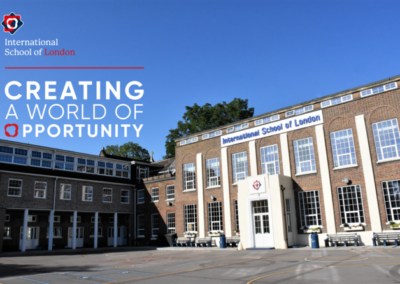




Five Things Families Need to Know About the School Day in the UK
For many expat families, the structure of the UK school day may differ from what they are used to
- School hours typically run from around 8.30am to 3.30pm
There is some variation between schools and age groups. Unlike in many countries, the school day is relatively short, and working parents may need to plan for wraparound care or after-school clubs.
- School uniforms are the norm in most UK schools
This is particularly true in the state sector, and are often viewed as a way to promote equality and a sense of belonging.
- Lunch arrangements vary
Younger children in state schools may be entitled to free school meals, while others can bring a packed lunch or purchase food from the school canteen.
- The academic year is divided into three terms
Each term is punctuated by half-term breaks and longer holidays at Christmas, Easter and summer.
- After-school clubs and activities are widely available
They cover sports, music and academic enrichment, although places can be limited and may require early sign-up.
How to Apply to UK Schools
The school application process in the UK varies depending on the type of school and a child’s age, and understanding the timelines is critical.
Applications to state primary schools for reception places (the first year of school) are usually submitted through the local authority by early January for entry the following September.
State secondary school applications follow an even earlier timetable, with deadlines typically falling at the end of October in the year before entry. Missing these dates can significantly reduce the likelihood of securing a place at a preferred school.
Late applications are still accepted, but they are processed only after all on-time applications have been considered, meaning families may have fewer options available, particularly in high-demand areas.
For families relocating outside the usual admissions cycle, in-year admissions allow applications to be made at any point during the school year, subject to spaces being available.
If all preferred schools are full, the local authority has a duty to offer a place at the nearest school with availability. While this ensures that every child has access to education, it may not always align with a family’s first choice, making advance planning especially important for relocating families.
Finding Good Schools in the UK – Top Tips for Parents
Online directories, school league tables and inspection reports provide a wealth of data and valuable insight. In the words of one expat:
My advice would be first to check out the local schools and their performance tables at gov.co.uk Here you can view and download exam and test results, Ofsted reports and financial information.
Check the school website for open days. These are typically held in spring and / or autumn. Families can visit the school and see it in action, speak to staff and pupils, and judge whether it feels like the right fit. If you can’t attend the open day, ask if you’re able to visit at another mutually convenient time.
Conversations with other parents can help you gain another perspective of the school. If you can’t speak to parents in person, check online forums where you can ask for feedback.
Check out the school website and social media channels. School websites can also also offer a wealth of information.
Visit if possible and read the web site and the school’s Facebook page to get a feel for the spirit of the school.
US Expat
For expat families, choosing a school is one of the most important decisions of any relocation. With early planning, informed advice and a clear sense of priorities, it is possible to navigate the system successfully and find a school where children can feel settled, supported and inspired.