Education in Germany
For expatriate families relocating to Germany for work, this article provides a brief overview of the German education landscape, covering its structure, recent performance metrics, and a comparative review of both the State and International School options.
PISA Rankings and International School Statistics
Based on the latest available PISA 2022 rankings, the German state system saw decline in scores overall compared to 2018. In fact the OECD/PISA 2022 results showed worse performance across all core subjects, with scores for 15-year-olds in Mathematics and Reading recording the largest single drop since PISA began.
Germany’s combined ranking is now closer to 24th globally and 18th among OECD countries when looking at the average of Mathematics, Reading and Science. More specifically, Germany ranked:
- Maths: 24th (down from 16th)
- Reading: 21st (down from 16th)
- Science: 21st (down from 12th)
Meanwhile, international Schools have experienced a period of sustained growth this decade globally. According to ISC Research, the German international schools market has seen continued growth beyond the 2022 figures of 165 schools educating 67,400 students. Germany remains one of the largest concentrations of IB World Schools in Europe (in 2022, ISC reported 82 schools, but this is likely to be higher now).
Most of these International Schools are located in the country’s biggest cities – Berlin, Frankfurt, Munich and Hamburg, but even smaller cities such as Hanover and Dresden have an international option. The majority follow the IB, but other schools teach country-specific curriculums including British, American, French, Swiss and Japanese.
Early Years Education in Germany
Children in Germany must attend school between the ages of six and 16. The vast majority of families use the public system, which is well established and free to all, including expats. Less than nine per cent of locals attend a private secondary school, although this is increasing.
The obvious barrier faced by international families considering the public system is language. For children at primary level this is less of an issue as young children are quick to pick up the language, but it becomes more problematic further up the school.
Before school, children usually attend “kita” from the age of three, which can be private or state funded. Unlike in many other countries, “kita” is not academic – its focus tends to be on socialisation and play-based activities. Primary school (“grundschale”) goes from grades 1 to 6 (ages 6 to 10 or 12, depending on the state).
The German School Day & the Evolving debate on Streaming
Although strong academically, some expats find the German public system utilitarian. The school day often finishes at lunchtime and extra-curricular activities, particularly sport, can be limited. While the traditional school day ends at lunchtime, this is in transition. The federal government has legislated a legal entitlement for all primary school children to receive all-day care (Ganztagsbetreuung) starting in 2029.
In Germany students are streamed in level 4 (level 6 in Berlin) according to their predicted academic ability with one stream “gymnasium” earmarked for university after taking the final Abitur exam. The rest attend “realschule” or “hauptshcule” which provide a more general education to the age of 15/16.
This remains the biggest controversial point in the German system.
“It’s very early to determine a child’s ability, particularly for boys or children who speak German as a second language,” says Christina Limbird, co-founder and managing director of Berlin-based Linden Global Learning Support.
While the age of streaming (Grade 4/6) is still in place, the debate and pressure to reform this early selection process have intensified, especially given the poor PISA 2022 results linked to equity issues. The pressure to consolidate Hauptschule and Realschule into broader, non-selective comprehensive schools (Gemeinschaftsschule/Gesamtschule) is a strong, ongoing trend across many states.
It is also worth noting that the final Abitur exam timeline varies. Germany had a major reform where many Gymnasien switched from a 9-year track (G9) to an 8-year track (G8). However, since 2018/2019, many German states (including Bavaria, Hesse, Lower Saxony, and most of the largest ones) have been reversing this trend and returning to G9 (Abitur after 13 years of schooling).
International Schools offer an alternative for Ex-pat families
For many expat families, Germany’s international schools are a good alternative. Lessons are conducted in English and most follow the internationally-recognised IB curriculum, or work towards UK IGCSE exams or the American High School Diploma. Fees range from EUR 14,000 to EUR 25,000 per year, with the high end schools offering International Bacculaureate priced up to EUR 30,000.
The Culture of International Schools in Germany
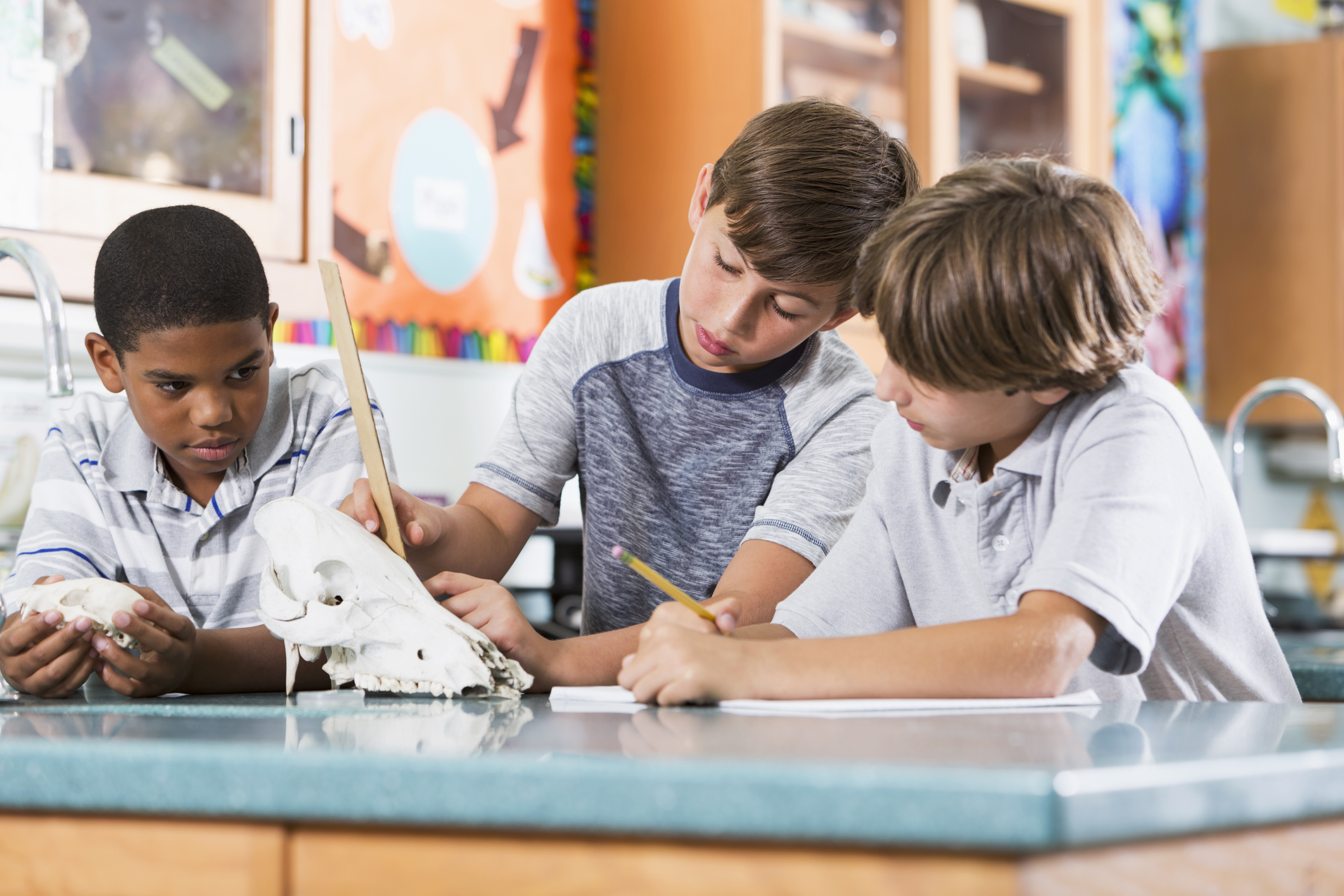
The international schools tend to be more down to earth and relaxed than in other parts of the world.
“Many don’t have all the bells and whistles of schools in Asia. They are often housed in old historic budlings and don’t have the sprawling campuses you find elsewhere. But you have high quality teachers, and most are accredited to European Council of International Schools which has high standards,” says Limbird.
In addition, class sizes are smaller than in public schools, the curriculum tends to be more progressive, facilities are better and there is more support for pupils with additional needs.
“International schools in Europe have traditionally admitted expat students with only a small percentage of host nation families,” says Nalini Cook, head of global research at ISC Research. “However, locals, including in Germany, are now seeking them out to develop English language skills or for the international mindedness, special educational needs provision, and pastoral care that may not be available in the state school.”
A overview of top international schools in Germany
Berlin
Berlin is the country’s political and cultural hub and has one of the highest populations in the EU at 3.87 million (as of 2023) — and the greatest concentration of international schools in the country.
One of the oldest and most prestigious is the Berlin Brandenburg International School, established in 1990, and popular with the diplomatic community. The senior school is based in Kleinmachnow, a popular expat area and set on an enormous 360,000 square meter rural campus. The school follows the IB curriculum and there’s a comprehensive range of extra curricula activities. Boarding is available for years 9 to 12 and there are currently around 70 boarders from around the globe.
One of most popular schools in the city is the Berlin Metropolitan School, favored by the techie/start up set. It opened in 2004 and has a waiting list for most year groups thanks to its convenient city-centre location. A through-train school, from kindergarten to year 12, it educates around 1000 students incorporating 65 nationalities. The school follows a hybrid local and international curriculum leading to IGCSE exams and the Mittlere Schulabschluss (MSA) in grades 9 and 10, as well as the IB diploma in grades 11 and 12.
Berlin International School in the southwestern suburb of Dahlem is also popular with expats. Operated by the private Kant Foundation, it was established in 1998 and is housed in an attractive historic building. The 900 students work towards IGSE and then the IB.
There are also a couple of highly rated state-funded international schools in the city, including the Nelson Mandela School, an academic bilingual school founded in 2000 and a member of the UNESCO Associated Schools Project (a network of schools which promote the principles and values of UNESCO). The school takes students from grade 1 who graduate with either the bilingual Abitur or the IB. Lessons are conducted in English or German and non-German speakers receive special tuition in German. There are no fees and, not surprisingly, places are not easy to secure.
The state-run John F. Kennedy School is also free and hugely popular with Americans and locals alike, not least because of its strong academic record. Originally founded as the German/American community school in 1960, now the 1700 students work towards the Abitur (the German high school qualification) or the American High school Diploma.
In addition to state and international schools, there are 33 state-funded bilingual primary schools in Berlin called Europe schools. These are state schools set up by the Berlin authorities which operate in a variety of language options including German combined with English, Spanish, Turkish and Russian. Classes are run on 50/50 nationality basis. Two of these schools, the Charles Dickens Primary and the Quentin Blake combine elements of German and British curriculums and subjects are taught in both languages.
Munich
Elsewhere in Germany, there are good international school offerings. Munich is the third largest city (after Berlin and Hamburg) with a population of 1.5 million and attracts expats to its technology, automotive and electronics industries. The city is home to a number of large organisations including BMW Group, Allianz, Siemens, Infineon, Google, Airbus, Microsoft, Adidas, and Roche.
According to the ECA’s livability rankings 2022, which evaluates 500 cities around the world for quality for life for expats, Munich ranked 16th gobally and is Germany’s second highest ranking city (pipped by Bonn).
The Bavarian International School provides kindergarten, early years and primary education to 250 children from over 30 nationalities, including a sizeable local cohort.
“Community is at the heart of everything we do,” says Marko Madge, the school’s head of communications. “Our expats and locals support each other giving everyone a feeling of home away from home.”
The school is seeing an increase in local enrolments: “Families have realised that the IB offers an outstanding curriculum which really prepares children for the world,” says Madge.
The Munich International School is seeing the same increase. It follows an IB curriculum and sits on a 55-acre campus in an idyllic nature reserve, with a recently opened contemporary fitness centre and athletics facilities.
“Parents are increasingly looking for a school that offers a holistic approach and better resources than local public schools,” says Helena Stephan, the school’s marketing manager. “Working parents want schools with longer opening hours where their kids feel at home and that is what we have.”

Frankfurt
Frankfurt is a major financial hub for Europe, home to the European Central Bank, the Deutsche Bundesbank, and the Frankfurt Stock Exchange. Frankfurt is very diverse – over 30% of inhabitants are expats from 180 different countries.
Therefore it’s no surprise that Frankfurt has 14 international schools, including the popular Frankfurt International school, founded in 1961 and one of the oldest international schools in Europe. An English speaking IB school, it educates 1800 students on two campuses.
For children who are better suited to a smaller school, the Metropolitan School Frankfurt, founded by investment banker Peter Ferres in 2007, has 650 students from 55 countries working towards IGCSE exams and the IB.
The ISF International School Frankfurt Rhien- Main, between Frankfurt and Weisbaden, is also popular with expats. Students can take IGSE followed by the IB or German curriculum for native speakers. The Lycee Francais Victor Hugo Frankfurt offers French curriculum alongside the Abi-vac for bilingual students.
Although Germany has not traditionally had a boarding tradition, this is changing according to the Salem International Boarding School on the picturesque shores of Lake Constance (within one to two hours of Zurich and Stuttgart airports) which hosts 45 nationalities on its campus. The school, founded in 1919, follows the German and IB curriculums and Around 95 per cent of the 600 students are boarders.
“Traditionally there has always been high demand from China and Eastern Europe and this is increasing again post pandemic,” says Stephanie Nau, head of admissions. “The biggest change has been in applications from Germany. Before Brexit and the pandemic there was no real boarding tradition here as people would send their children to study in the UK or USA for high school years. Now German families realise there are good educational choices nearer home.”

Making the Right Educational Choice in Germany
For expat families relocating to Germany, the choice of school is highly personal and often boils down to a few critical factors: duration of stay, age of the child, and budget.
Key Takeaways for Expat Parents
- Long-Term vs. Short-Term Stay
If your assignment is short-term (3 years or less), the International School route is generally the smoothest option. It guarantees a familiar, English-speaking curriculum (IB, IGCSE, or American Diploma) and ensures seamless reentry into a home or third-country education system later on. - The Language Factor
If your child is pre-primary or early primary (under 8 years old), immersion in the State System is a viable and beneficial choice. Young children absorb German quickly, giving them fluency and integration. For older children, the language barrier in the public system becomes a significant challenge, making private or international options more manageable. - The Early Streaming Debate:
Be aware that the German public system streams students into different educational paths (Gymnasium, Realschule, Hauptschule) as early as Grade 4 (age 10). This early decision-making can be particularly challenging for children still mastering the German language, as highlighted by expert Christina Limbird. - Budget Considerations
The State System is high-quality and free, even for expats. International School fees are substantial (around EUR 20,000 per year for older students). Check if your relocation package includes an education allowance, as this often determines the feasibility of the private route.
Our Featured Schools section is a great resource to get started, then you can visit schools in your destination city, talk to admissions teams about curriculum continuity and consult local expat groups for first-hand parental experiences before making your final choice.